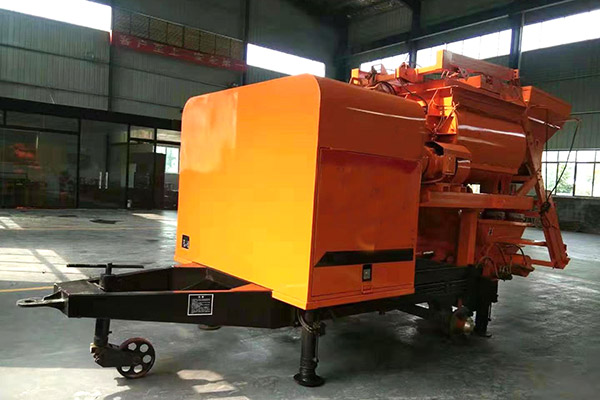
Merits of Full Automatic Concrete Mixing Plant
Engineering, manufacturing and after-sales support for Merits of Full Automatic Concrete Mixing Plant — specification, layout and.
View details
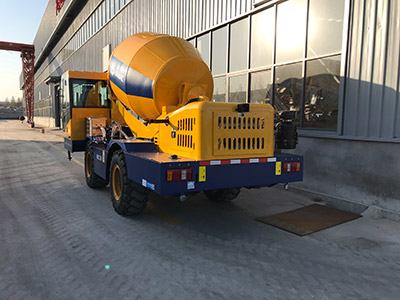
Self loading concrete mixer is a new type mobile concrete mixer. Compared to the other general concrete mixers, the biggest advantage is that it can achieve.
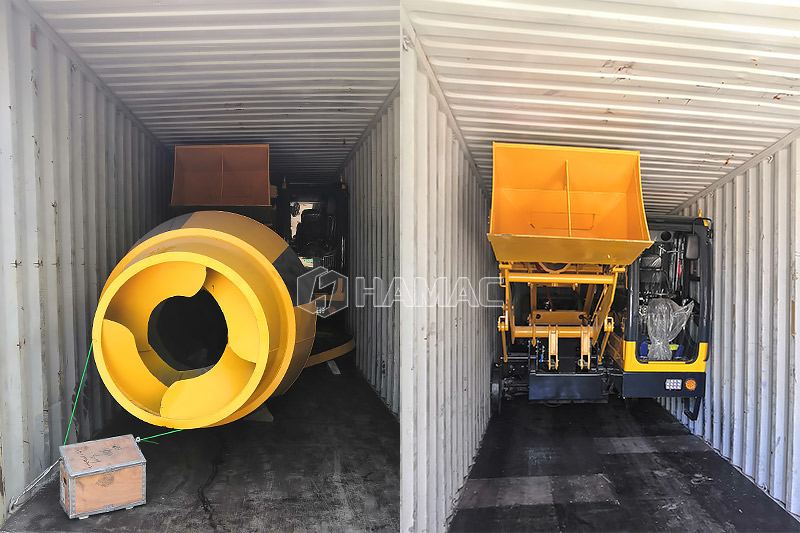
For contractors working across several small sites per week — rural roads, canal linings, housing clusters, small municipal works — this removes the need to move a full batching plant or to keep a fleet of trucks supplied over long haul roads.
HAMAC builds capacities from roughly 1.2 m³ to 6.5 m³ per batch, with articulated steering, four-wheel drive and either a fixed or a 270° rotating discharge drum. Optional weighing printers and boom-side discharge extensions are available.
Choosing a Classifications of self loading mixers is rarely decided by the price tag alone. Downtime, concrete quality consistency, fuel consumption per cubic metre and the availability of wear parts across a five-year operating window matter far more to the final cost per tonne or per cubic metre produced.
Discharge to either side and over the machine, useful on narrow alignments and inside structures.
Digital water meter and batch counter provide traceable output records.
No loader, no batching plant, no mixer truck — one machine completes the whole concrete chain.
Best economics appear where daily volume sits between roughly 30 and 200 m³.
Articulated frame, four-wheel drive and high-flotation tyres cope with muddy access roads.
Hydraulic loading bucket with weigh-by-drum keeps proportions consistent batch to batch.
Indicative ranges for standard configurations. Final values are confirmed against your project requirements.
| Parameter | Specification |
|---|---|
| Batch output | 1.2 - 6.5 m³ per batch |
| Drum capacity | 1.8 - 9 m³ |
| Drum rotation | Up to 270° hydraulic rotation |
| Chassis | Articulated 4-wheel drive, 4-wheel steer option |
| Engine power | 55 - 130 kW |
| Water system | Electric pump with digital flow meter and pressure washer |
| Loading bucket capacity | 0.3 - 0.8 m³ |
| Weighing system | Electronic drum weighing with batch counter and printer option |
The applications below reflect the situations in which HAMAC customers most commonly deploy it.
Self-sufficient production in remote areas
Continuous linear pours outside the plant supply radius
Small pours along long alignments where a batching plant cannot follow
Mobile production for scattered repair locations
Footings, slabs and retaining walls in tight access conditions
Six defined stages, each with named deliverables, so nothing is left to interpretation.
We start with your mix design, hourly output target, aggregate size, jobsite power supply and site layout — not with a catalogue page.
Our engineering team issues a layout drawing, foundation loads, power requirement and an equipment list matched to the target output.
A fixed specification quotation with clear technical annexes protects both sides; no vague "standard configuration" wording.
Weekly production photos, welding and pressure test records, plus third-party inspection if your project requires it.
Container or break-bulk shipment, then on-site supervision of assembly, alignment, calibration and dry-run.
Remote diagnostics by video call, spare parts dispatch within 48 hours for stocked items, and periodic return visits.
Engineering, manufacturing and after-sales support for Merits of Full Automatic Concrete Mixing Plant — specification, layout and.
View details
Engineering, manufacturing and after-sales support for How to Distinguish the Cement Quality of Concrete Mixing Plant —.
View details
Engineering, manufacturing and after-sales support for How to Solve Problems After Concrete Mixing Plant Being Into Production —.
View details
Engineering, manufacturing and after-sales support for The Property of Concrete Mixing Plant — specification, layout and.
View details
Engineering, manufacturing and after-sales support for Development Situation of Concrete Mixing Plant — specification, layout and.
View details
Engineering, manufacturing and after-sales support for Ten Outstanding Features of the Most Economical Concrete Mixing Plant —.
View detailsTell us the required output, material characteristics, site power supply and destination port. Our engineers return a complete technical and commercial proposal, normally within one working day.
Email: [email protected]
WhatsApp: +8619138100129
Twenty years of export experience across eighty countries. One engineer follows your project from enquiry to commissioning.
Fast reply from our sales engineers, Mon - Sat.
Ask for a quotation, spec sheet or factory video.
Start WhatsApp ChatSpec drawings, quotations and project proposals.
We answer technical enquiries within one working day.
Write an Email